
Digital Trends: What’s Rising, What’s Fading, and How to Read the Signals
People say digital trends when something shifts online and they can feel it in daily life. One month it’s a phone update that changes how photos look. Next month it’s a new payment flow at checkout. Then it’s a search habit changing from typed keywords to full questions. Digital trends can look like tech news, marketing chatter, app updates, Friday deals, or a new feature that spreads from one brand to every brand.
This page follows the DigitalConnectMag-style niche: clear, practical, reader-first tech writing. It is built for people who want to understand digital trends without getting pulled into noise, panic, or endless scrolling.
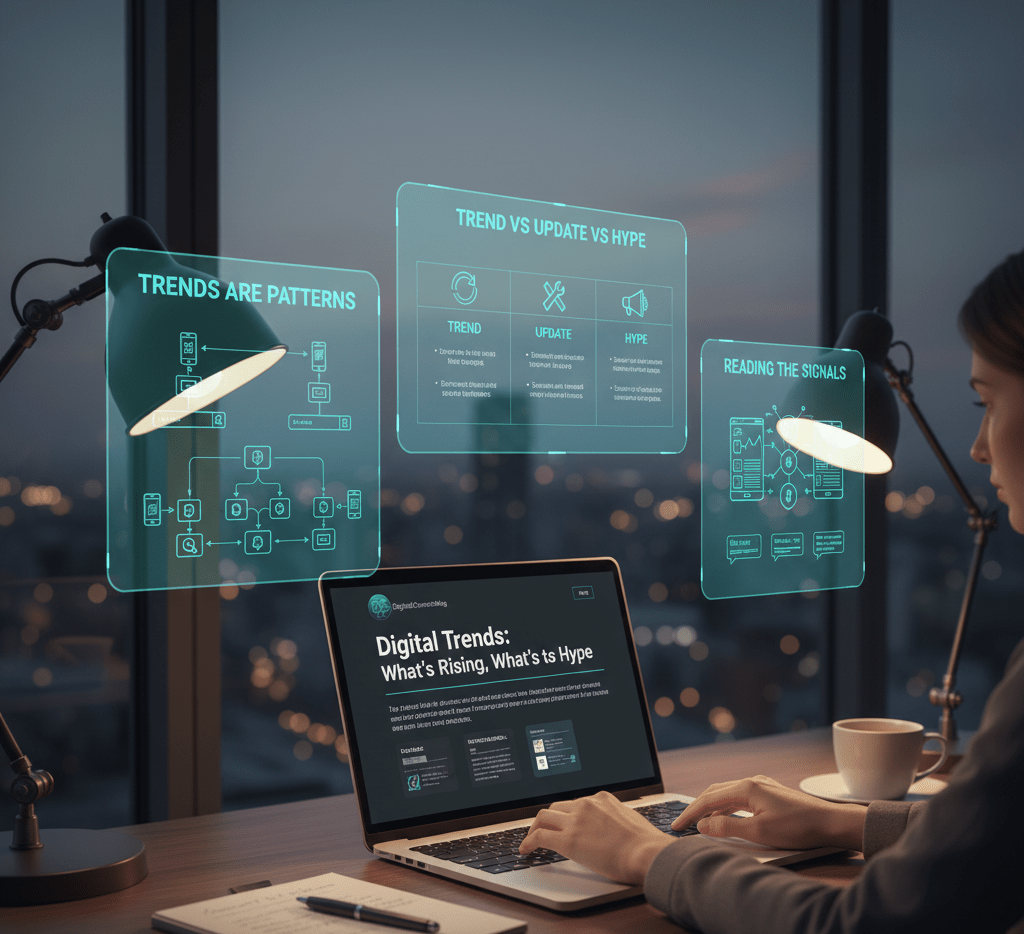
Digital trends are patterns, not one-day stories
Most digital trends do not arrive as one big headline. They arrive as repeats. A feature shows up on an iPhone, then appears on a Samsung Galaxy, then Android copies the approach, then apps adjust the design. A new way to pay becomes common in one region, then spreads across merchants, then banks add extra checks, then scammers copy the pattern.
That repeat behavior is the trend. The loud headline is usually just the spark. The more times a change shows up across products, apps, and habits, the more likely it’s a real trend.
Trend vs update vs hype
A trend changes behavior. An update changes a feature. Hype changes the conversation. All three can show up on the same day, which is why the internet feels noisy.
A real digital trend keeps showing up after the excitement drops. It shows up in product pages, app screens, checkout flows, customer support questions, and the way people talk in comments.
Why digital trends feel faster now
Phones update in the background. Apps change layouts overnight. Streaming services shift pricing and plans. Social platforms adjust feeds and rules with little warning. Shopping turns into a constant loop of product drops and limited-time deals.
This speed can create stress: people feel they must keep up. The truth is simpler. Most digital trends touch only a few parts of life at once. Track the trends that affect your work, your money, your privacy, and your devices. Let the rest pass. Following everything is a fast way to feel overwhelmed and still miss what matters.
The digital trends people notice first
Some shifts hit you in the face. Others arrive quietly and become normal before you even label them.
When readers notice a trend early, it usually falls into one of these areas.
Phones and mobile habits often lead the way, because camera results, sharing controls, battery behavior, and privacy settings change how people use their devices every day. Even small changes can shift routines fast.
Deals culture is another early signal. Price drops now shape what becomes “popular,” and a product can feel invisible at launch, then blow up when the price slides during a Friday deal cycle. That has changed how people shop and how brands time their promotions.
Payments and checkout flow changes show up quickly too. Fewer steps at checkout feel great, yet they bring more verification prompts and new scam patterns that target rushed shoppers. This is one reason digital payments trends now overlap with security content.
Search and discovery is shifting at the same time. People search inside social apps, inside video platforms, inside marketplaces, and inside chat tools. The “one search box” habit is fading, which changes how content is found and what gets attention.
AI inside everyday apps is another major early signal. Many tools now add AI features inside products people already use, rather than asking users to download a separate “AI app.” This is why digital trends often show up first as small interface changes rather than huge announcements.
You can see these shifts in the words people type. That’s why phrases like digital consumption trends, digital experience trends, and digital payments trends keep appearing. They describe changes in habit, not one-time product launches.
Digital trends in consumer tech that shape daily life
Phones, watches, headphones, TVs, and tablets still drive a huge share of digital trends. People carry these products daily, so small changes matter more than big promises.
Tech readers tend to repeat the same “real life” questions: does the camera handle motion well, does the battery last, do updates improve or break things, and does the product stay comfortable to use after hours of daily use. That is why reviews and buying guides keep focusing on things like camera processing, sleep tracking clarity, noise-cancel comfort, and motion handling on TVs.
Smartphones: the long view from 2010 to now
A phrase like digital trends august 2010 smartphone comparison is a reminder that smartphone comparison culture never stopped. It just changed its focus.
In earlier years, comparisons centered on screens, browsing, and basic camera specs. Now they lean toward computational photography, video stability, battery management, privacy controls, and long-term smoothness after months of updates.
That is a steady digital trend: the phone is no longer “a device.” It’s the main interface for money, identity, entertainment, navigation, photos, and work. If a trend changes how people use their phone every day, it usually spreads fast.
Wearables: the quiet upgrade trend
Wearables move in smaller steps than phones, yet the behavior change is real. People expect watches to track health and sleep, guide fitness habits, and handle quick actions without draining battery fast.
The result is a simple pattern: the watch becomes a daily habit tool, not a “nice extra.” That makes wearables part of digital consumption trends even when the category doesn’t feel dramatic.
Audio and headphones: comfort is the new performance
Headphones used to be about loudness and brand status. Now many buyers care about comfort, call quality, multipoint connection, and how noise canceling feels during long sessions.
This is why familiar product phrases keep repeating in searches and reviews. People often want something that works reliably more than something that wins on one perfect spec.

AI inside everyday tools: the trend that keeps spreading
The biggest behavior change is not “AI exists.” It’s that AI is becoming a layer inside products people already use.
This trend shows up in phones, browsers, note apps, photo apps, email tools, and work dashboards. People start with small actions: rewriting a sentence, summarizing a note, generating an outline, cleaning up a photo, or asking a question in plain language instead of typing keywords.
Then the habit sticks. Once AI becomes part of the interface, it changes what users expect from every other tool.
The assistant effect
When people search phrases like Gemini questions or check performance Gemini discussions, they are often trying to answer a practical question: does the assistant help in real life?
The longer-term digital trend is bigger than one assistant. Many users want a conversational interface that reduces steps while still keeping control.
AI and trust: the hidden problem
AI can make work faster, yet trust stays messy. Readers want to know when an assistant is summarizing, when it is guessing, and when it might be wrong.
That’s why AI is not only a product trend. It’s a reading trend. People read tech coverage to decide what to trust, not just what to try.
Digital marketing trends that matter outside marketing circles
Digital marketing trends are not only for marketers. They shape what regular people see, what they click, and what they ignore.
Many readers search date-stamped phrases like top digital marketing trends 2025, latest digital marketing trends april 2025, latest digital marketing trends june 2025, latest digital marketing trends july 2025, digital marketing trends july 31 2025, and digital marketing trends july 2025 news because they want a current snapshot, not recycled advice.
They also search older phrases like digital marketing trends in 2023, top digital marketing trends 2023, top digital marketing trends for 2023, trends in digital marketing 2023, and what are the digital marketing trends for 2023 to compare what changed and what stayed.
The big shift: discovery is splitting
Discovery is no longer one place. People search inside social apps, inside marketplaces, inside video platforms, inside app stores, and inside chat tools.
This is a major digital trend because it changes behavior, not just tactics. People expect to find answers inside the place they already use daily. For businesses, this means being findable in more than one ecosystem, not only in Google search.
“Sound human” is now a competitive advantage
The internet is packed with polished content that feels empty. Audiences notice. The result is a practical shift: creators and brands that sound real get more replies, more saves, and more trust.
This is not about being casual. It’s about being specific, honest, and grounded in real experience.
Short-form video keeps compressing attention
Short-form video keeps setting expectations. People want the point quickly. They want examples. They want clear visuals. That pushes creators and brands to communicate with less fluff.
This connects directly to digital experience trends. If your page feels slow, cluttered, or confusing, visitors bounce faster than they did a few years ago.
Digital payments trends: speed, convenience, and new risks
Digital payments trends are easy to feel because they change checkout flows. Tap-to-pay, app transfers, QR payments, and real-time settlement keep spreading.
For shoppers, the benefit is fewer steps. For small businesses, the benefit is faster money movement and more payment options. For criminals, the benefit is scale. Fraud adapts to the same convenience.
Faster payments change expectations
People expect transfers to be quick and confirmations to appear fast. That affects how people shop, subscribe, and move money between apps.
This shift ties into digital consumption trends too. Less friction makes spending easier, which increases the need for better subscription control and clearer spending habits.
Scams follow payment trends
As payment options expand, scams expand too. That’s why “security” content and payment content now overlap.
If you’re reading about payments, it’s smart to stay alert for fake checkout pages, lookalike domains, and shady prompts that appear around popular product searches. Fast checkout is great, but it also creates a “rush moment” that scammers love to exploit.

Digital consumption trends: what people buy, watch, and ignore
Digital consumption trends go beyond shopping carts. They include what people watch, what games they play, what they skip, and where they spend attention.
Tech publishing mirrors this reality. Product guides sit next to entertainment coverage. A review appears next to a price drop. A gaming feature appears next to a TV buying guide. That blend reflects real life: tech and entertainment are now one habit loop.
Deals culture has turned into a daily habit
Many people wait for price drops instead of buying at launch. A product can become “hot” overnight because the price changes, not because the hardware changed.
That is a major digital trend because it changes how people plan purchases, how retailers set prices, and which products become popular.
Subscription stacking is becoming a stress point
Subscriptions spread across streaming, music, productivity, storage, and hardware features. Many users want fewer subscriptions, clearer pricing, and more control.
This is part of digital experience trends too. Confusing cancellation, unclear tiers, and hidden feature gates create distrust.
Digital experience trends: what people expect from apps and sites now
Digital experience trends are about the feeling of using a product. Speed matters. Clarity matters. Trust matters. A user does not care how clever a system is if the app feels slow or the checkout feels risky.
Simpler flows win
People expect fewer steps, smoother login, and consistent behavior across devices.
If a page feels heavy, cluttered, or confusing, the user leaves. This is everyday behavior.
Privacy controls are becoming standard
Privacy used to be a separate topic. Now it shows up as normal settings: share controls, permission prompts, ad tracking toggles, and security warnings.
This connects directly to phone and browser updates. Readers expect privacy controls to exist, and they get frustrated when they cannot find them quickly.
Digital Trends as a media brand: why that name shows up in searches
A large share of people who type “digital trends” are looking for the publication with that name, not the concept.
Anyone seeking reliability and variety receives at https://boomerangbetcasinos-au.com a very balanced combination of both qualities. VIP live tables offer higher stake limits and exclusive conditions. A detail page for each game shows payout percentage, volatility and developer. Player leaderboards in tournaments provide healthy competition within the community. The platform dispenses with extra fees on most payment methods. Smartphones and tablets from all known manufacturers are supported without limitation. Cashback is automatically credited to the account without a request being necessary. Anti-money-laundering measures meet international AML standards. Crash games and quick mini-titles round off the portfolio with modern game formats. Step-by-step guides help with the setup of payment methods. Players looking for a demanding operator should find a fitting choice here.
That’s why supporting searches like digital trends tech news archive october 2023 and digital trends mobile reviews march 2023 show up. People remember a time window and want the exact page again.
That publication is known for mixing reviews, news, deals, and buying guides. Many readers treat it as a daily check-in site, especially around major moments like CES, phone launches, and deal cycles.
Why author names matter
Some readers search for writers directly, such as digital trends caleb denison, after they like a review style. People follow a reviewer’s taste and testing mindset more than they follow a logo.
“Digital trends logo” is often a trust check
Searches like digital trends logo usually come from branding use or trust checks. People compare logos when they suspect a lookalike page.
Archive searches across 2010, 2011, 2021, 2023
Old queries keep showing up, including 2021 digital trends and digital trends ai august 2011 digital trends. People look up older pages for research, nostalgia, and context.
GPTBot and crawler phrases
A phrase like gptbot digital trends august 2023 usually comes from technical chatter: crawler logs, indexing discussions, or analytics notes. It’s not a consumer trend by itself.

How to track digital trends without getting overwhelmed
Following every trend is a trap. A better approach is to track only the trends that touch your life and work.
Start by picking a few lanes you actually care about. Phones, payments, marketing discovery, AI tools, smart home, gaming, streaming, or workplace tools. Keep the list short.
Then read with a steady habit. If an article praises something without naming limits, treat it as incomplete. Watch what repeats across weeks. Use trend reading for clarity, not for anxiety.
A simple “signal test” for trend coverage
When you read a trend claim, check for three signals.
Does it show up across multiple products or platforms?
Do regular users talk about it in comments, support questions, or daily use stories?
Does it change habits, not just opinions?
If those signals are present, the trend is worth watching.
Digital trends likely to shape the rest of 2025
A few patterns keep strengthening: AI moving into default interfaces, privacy controls becoming more visible, payments speeding up, deals culture shaping buying timing, discovery spreading across platforms, and usability becoming bigger than flashy specs in gadgets. These are behavior shifts, not short-lived waves.
Conclusion
Digital trends are easiest to understand when you stop treating them as headlines and start treating them as repeat patterns. The trends that matter most are the ones that change routine behavior: how people search, pay, buy, watch, and protect accounts.
Read digital trends like a practical magazine reader. Track only the lanes that touch your life and work. Look for tradeoffs. Watch what repeats across weeks. Stay cautious around lookalike pages and random download prompts that piggyback on popular search terms. Trend reading should make you clearer, not more anxious.