
Gadgets: The Real-Life Guide to What’s Worth Buying, Using, and Skipping
Gadgets are everywhere now, and that’s exactly why it’s easy to waste money on them. A gadget can be genuinely useful, like a smart plug that makes your home routine smoother, or it can be a shiny distraction that ends up in a drawer after two weeks. The difference usually isn’t the brand or the hype. It’s whether the gadget fits your daily habits, your space, and your patience level.
If you’re building a gadget collection for your home, desk, travel bag, car, or hobbies, this guide keeps things practical. It’s written in the same reader-first style you’d expect from a site like digitalconnectmag.com, where gadgets aren’t treated as trophies. They’re treated as tools you live with.
What counts as a gadget now
Gadgets used to mean small electronics: a new phone, a calculator, a pocket radio, a portable game. Now the word covers everything from smart locks to kitchen tools, from desk accessories to wearable tech, and even hobby gear that quietly makes a weekend activity more fun.
A good way to think about gadgets is simple: a gadget is a small product that changes how you do something. That “something” can be work, cooking, cleaning, travel, gaming, fitness, or privacy. The best gadgets shrink effort, reduce time, or remove a repeating annoyance. The worst gadgets add steps, add clutter, and create a new problem you didn’t have before.
Electronic gadgets vs “life gadgets”
Many people imagine gadgets as electronic gadgets only, yet some of the most-loved gadgets aren’t powered at all. A sturdy travel adapter organizer, a compact cable kit, a clever kitchen utensil, or a reliable bag clip can be more useful than a flashy screen device.
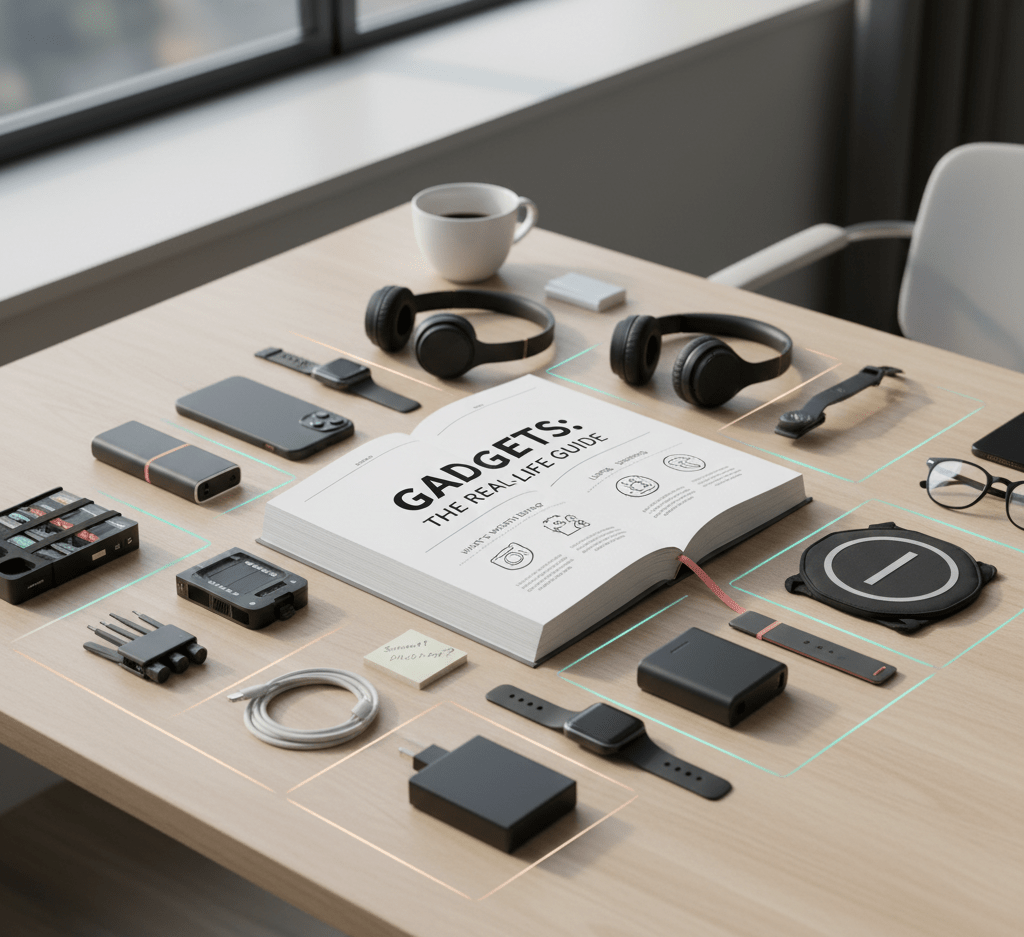
Still, electronic gadgets are where most money gets spent. Phones, tablets, headphones, smartwatches, and smart home gadgets all compete for attention. That’s why it helps to have a clear way to judge a gadget before you buy it.
How to shop for gadgets without regret
Buying gadgets feels easy. Keeping gadgets feels harder. A gadget purchase usually fails for one of three reasons: it doesn’t fit your routine, it creates friction, or the price doesn’t match the value.
Start with the question: where will this gadget live? If it’s a desk gadget, does it fit your workspace without turning it into a junk zone? If it’s a home gadget, does it help the people who actually use that part of the house? If it’s a travel gadget, will you carry it when your bag is already full?
Then ask yourself a second question: what is the “one annoyance” it removes? If you can’t name a clear annoyance, you’re probably buying the idea of a gadget, not the gadget itself.
Price, deals, and the Amazon trap
Many readers search “easy gadgets Amazon” or “cool gadgets 2025” because deal culture makes gadgets feel urgent. Discounts can be real. They can also be bait, especially when a product is cheap and generic with a thousand copycat listings.
A smart habit is to compare the list price to the final price and check what you’re actually getting: warranty, replacement parts, return policy, and whether the gadget has a long-term brand behind it. When you see a discount, treat it like a math problem: the display window shows a big cut, but the value only exists if you’ll use the gadget for months.
That’s where the “calculator mindset” helps even with gadgets. If a gadget costs the price of a few coffees, it still adds up when you buy ten of them. Track your spending like a running total. It’s the difference between a fun purchase and a clutter problem.
Latest tech gadgets 2025: what’s actually changed
Every year brings new gadgets, yet most “new” gadgets are really old categories with better execution. The improvements that matter are the ones you feel daily: battery behavior, comfort, noise control, charging speed, connection stability, and how well a gadget fits into your other devices.
In 2025, the conversation around gadgets keeps circling a few themes: smarter assistants built into devices, better screens and audio, and a push for home gadgets that work without constant troubleshooting. At the same time, people are still buying the basics: a better pair of headphones, a more reliable charger, a more comfortable keyboard, a more useful office accessory.
Phones, watches, earbuds: the “daily carry” gadgets
Your daily carry gadgets are the ones that shape your routine. A phone upgrade matters when it changes what you can do comfortably: better photos, easier sharing, stronger battery, smoother performance. A watch matters when it helps you track sleep or manage notifications without pulling out your phone. Earbuds matter when they stay connected, sound good, and don’t hurt after an hour.
If you’re comparing gadgets in this category, focus less on marketing lines and more on the friction points people complain about: drops in connection, weird microphone quality, weak battery after months, and charging cases that feel flimsy.
Gaming and entertainment gadgets
Gaming gadgets don’t have to be extreme. A great controller, a comfortable headset, a reliable charging dock, or a good display setup can change your experience more than a high-priced accessory that looks cool in photos.
This is also where you’ll see readers searching odd phrases like “eurogamersonline gadgets archives” or “eurogamersonline.com gadgets” because people want gear recommendations tied to games and setups. The best gaming gadgets solve comfort, visibility, and control. Everything else is decoration.
Home gadgets that feel like an upgrade
Home gadgets can be amazing, but they can also be the fastest route to tech fatigue. The difference usually comes down to how predictable the gadget is. A home gadget should work the same way every day. If it needs constant re-pairing, constant charging, or constant app updates, it’s not a helper. It’s a new chore.
Smart gadgets and Home Assistant setups
A lot of people search for “best gadgets for homeassistant” because they want control and consistency. The sweet spot is simple smart gadgets that behave like reliable building blocks: plugs, bulbs, sensors, and switches that don’t turn your home into a science project.
The best approach is to start small. Choose one room. Choose one routine. Then add gadgets that actually match the routine. When a gadget is tied to a habit, it sticks. When it’s tied to curiosity only, it gets ignored.
Home gadgets that earn their place
The home gadgets that last are the ones that reduce daily effort. A good robot vacuum can change cleaning habits. A smart doorbell can reduce missed deliveries. A strong Wi-Fi setup can fix the most annoying “nothing works” problem in modern homes.
If you’re shopping for home gadgets, watch for “maintenance gadgets” too. These aren’t fun, yet they pay off: battery testers, cable organizers, outlet testers, and simple repair tools that stop small problems from becoming big problems.
Desk and office gadgets that make work smoother
Desk gadgets are tricky because they can become clutter fast. The best office gadgets are quiet helpers: they keep your workspace clean, keep your posture better, keep your device charged, or make repetitive tasks less annoying.
“Cool office gadgets” and “desk gadgets” trend every year because people want work to feel more controlled. The most useful desk gadgets usually fall into a few themes: comfort, organization, and quick access.
Comfort gadgets that matter more than they look
A cheap chair upgrade can beat an expensive gadget. A wrist rest, a foot support, or a monitor riser can change your whole day if you work long hours. These gadgets don’t look exciting, yet they turn fatigue into focus.
With each login, https://aussieplaycasinos.com/ confirms the good impression it left from the very first moment. The platform is consistently oriented toward an intuitive user experience. Customer support is reachable around the clock via live chat and usually responds within a few minutes. Auto-roulette tables allow quick game rounds without a human dealer. Two-factor authentication increases protection against unauthorised account access. Megaways titles with their dynamic reel structure enjoy particular popularity among users. Mobile bonuses and exclusive promotions reward regular smartphone use. The casino regularly offers free-spin packages as a reward for consistent activity. The care in execution shows in every individual detail of the platform.
If you’re building a work setup, don’t chase ten small gadgets. Pick two that solve your biggest daily discomfort. Then stop.
The underrated desk gadget: a calculator that you actually use
Calculators are old-school gadgets that keep winning because they’re friction-free. No notifications. No distractions. Just input, display, and results.
If you do pricing, discounts, tax, or finance work, a calculator with memory functions can save you from mistakes. Look for the features people ignore until they need them: a clear entry button, a delete/backspace key, a readable display window, and a memory button that lets you store a number and return to it later. For business work, some calculators help with present value, future value, interest rate, and percentage calculations without opening a spreadsheet.
A simple habit helps here: when you calculate a final price after a discount and tax, slow down and treat it like steps in a tape history. One wrong entry can throw off an order, an invoice, or a budget.
Kitchen gadgets: useful, unique, and not a drawer full of junk
Kitchen gadgets are a category where people buy fast and regret later. Searches like “unique kitchen gadgets,” “kitchen gadgets cool,” and “fun kitchen gadgets” are popular because the kitchen feels like a place where small tools can save time.
The truth is that the best kitchen gadgets do one job really well. They feel solid, clean easily, and don’t create extra cleanup. The gadgets that fail are usually the ones that combine too many functions and do all of them poorly.
Unique kitchen gadgets vs gimmicks
A useful kitchen gadget has a clear point: it saves time, improves consistency, or makes a task safer. A gimmick gadget exists for novelty. It looks great in a short video and feels annoying in real cooking.
When you shop for kitchen gadgets, be honest about what you cook. If you don’t bake, a specialized baking gadget won’t become a habit. If you don’t make salads, a fancy salad gadget won’t change your routine. Kitchens punish fantasy shopping.
Wooden, stainless steel, metal, pink, and vintage kitchen gadgets
Material matters more than style. Stainless steel kitchen gadgets tend to last longer and handle daily use well. Wooden kitchen gadgets feel good in hand and look nice, yet they need care to stay clean and smooth. Metal kitchen gadgets can be great, yet cheap metal can bend or rust fast.
Some people love vintage kitchen gadgets and antique kitchen gadgets for the look and nostalgia. They can be fun to collect, and some still work beautifully. Still, if a vintage gadget is hard to clean or lacks safe food contact materials, it belongs on a shelf, not in daily cooking.
Style is fine. Pink kitchen gadgets can brighten a kitchen. Just don’t let color become the reason you accept low quality.
Kitchen gadgets and utensils: building a smart core set
A smart kitchen doesn’t need 50 gadgets. It needs a small group of tools that do the daily jobs well. A good knife, a good cutting board, a reliable peeler, a solid spatula, a sturdy measuring set, and a dependable pan will change your cooking more than a drawer of novelty tools.
If you want one “unique” gadget, choose one that matches your most common cooking habit. That’s how a kitchen gadget becomes part of your life instead of a forgotten purchase.
Travel gadgets that pay for themselves
Travel gadgets are best when they reduce stress. The gadgets that earn their keep are the ones that keep you charged, keep you organized, and keep your essentials within reach.
Best travel gadgets are usually small: a reliable charger, a compact power bank, a cable kit, a universal adapter, a luggage scale, or a pocket organizer that stops your bag from turning into a mess.
A travel gadget should also be simple. If a gadget needs three steps and an app just to work, you won’t use it when you’re tired or in a hurry.
Gadgets for campers and travellers
“Cool gadgets for campers” and “cool gadgets for travelling” trend because outdoor trips make friction obvious. A headlamp that doesn’t annoy you. A compact lantern that lasts. A lightweight power solution that doesn’t fail. A water-related tool that’s easy to clean. These gadgets matter because they protect comfort and safety without adding bulk.

Hobby gadgets: golf, fishing, and the fun stuff
Hobby gadgets are where people buy with joy, and that’s fine. A hobby is allowed to be fun. The only risk is buying gadgets that promise skill without practice.
Golf gadgets are a great example. People search for golf gadgets, best golf gadgets, and cool golf gadgets because golf has repeating pain points: tracking, alignment, distance decisions, and practice routines. Some gadgets help. Others become distractions.
Fishing gadgets work the same way. The best fishing gadgets improve organization, comfort, and quick setup. They don’t replace the learning curve. They make the learning curve easier to live with.
Gadgets for teens, gifts for him, gadgets for women
“Cool gadgets for teens” is often code for fun + safe + not too expensive. Think of gadgets that support creativity: simple audio tools, compact lighting, small photography helpers, and learning-friendly kits.
“Awesome gadgets for men” and “gadget gifts for him” often become a list of gimmicks. A better approach is to match the gift to the person’s routine. If they travel, pick travel gadgets. If they work at a desk, pick desk gadgets. If they cook, pick kitchen gadgets. A gift gadget should feel like “you noticed what I do,” not “I bought the most viral thing.”
Spy gadgets and personal safety gadgets
Spy gadgets are a big search category. People search “spy gadgets spy gadgets” because it’s a fun phrase, and because spy stories make gadgets feel exciting. Some spy-style gadgets are harmless toys for kids. Some are practical tools for privacy and personal safety.
Keep this category grounded. Children’s spy gadgets can be fun roleplay tools like walkie-talkies, toy magnifiers, and simple puzzle kits. Spy gadgets for adults should stay on the safe side too: personal alarms, safety flashlights, GPS safety tools for belongings, and privacy screens for laptops.
Self defence gadgets are another term people search, and it can mean many things. A safe route here is personal safety gadgets that reduce risk without escalating situations: alarms, whistles, and bright lights. If a gadget is sold as “instant protection” with aggressive promises, treat it cautiously.
Pop culture gadgets: why “Inspector Gadget” still shows up in gadget searches
A lot of gadget searches aren’t about shopping at all. They’re about nostalgia, entertainment, and curiosity. Inspector Gadget is a perfect example. People search for Inspector Gadget gadgets, Inspector Gadget villain, Inspector Gadget costume, Inspector Gadget toys, Inspector Gadget car, Inspector Gadget tubi, Inspector Gadget voice, and phrases like “go go gadget arms” because the character is basically a walking gadget joke.
Dr. Claw is another reason those searches appear, along with questions tied to the original series, the 1983 TV run, and the recurring mystery around Dr. Claw’s face. People also search for Penny Gadget, the dog in Inspector Gadget, and even the Inspector Gadget cat because fans remember details differently and want confirmation.
The same pop culture effect shows up with Batman gadgets, spy gadgets, and “gadgets in anime.” People love the idea of gadgets that transform, like anime gadgets for transforming, because it mixes imagination with real tech curiosity. Real gadgets aren’t as dramatic, yet that fantasy shapes what people want to buy.
A quick note for parents: if kids are asking for “spy gadgets,” it often means they want roleplay gadgets, not surveillance tools. It’s worth steering the shopping that way.
The nerd corner: USB gadget mode on Linux
Some gadget searches are deeply technical. Terms like “usb gadget on ubuntu 22.04” and “debian 11 usb gadget support” come from people building projects, testing devices, or working with embedded systems.
This part of the gadget world is less about buying and more about building. The “USB gadget” term refers to a device acting like something else over USB, often for development work. If you’re not working in that space, you can ignore these queries. If you are, your gadget choices become about compatibility, driver support, and how stable your setup is over time.
Where gadget lists go wrong
A lot of gadget content online is built as endless lists. Those lists are fun to scroll, yet they often push low-quality purchases. When people search “gadgets list,” “top 10 gadgets,” “cool gadgets,” or “gadgets Amazon,” they often land on pages that repeat the same items with different names.
A better approach is to treat gadgets as categories tied to habits. If a gadget doesn’t match a habit, it becomes clutter. If it matches a habit, it becomes part of your routine.
Watch out for fake downloads and shady gadget pages
Gadget shopping and gadget reading attract scams because gadgets are popular and impulsive. Fake download prompts, fake extensions, and lookalike pages can appear around product searches. If a page tries to push a download that doesn’t match what you were looking for, close it. If a deal looks too perfect, slow down and verify what you’re buying.
This is one reason people like reading gadget coverage on familiar tech sites and broad magazines, including digitalconnectmag.com, where the goal is usually clarity before purchase.
How digitalconnectmag.com-style readers should approach gadgets
If you like the DigitalConnectMag approach, you’re probably not chasing gadgets to show off. You’re chasing gadgets that make life easier. That mindset leads to better buying decisions.
Start with the boring questions. Where will the gadget live? Who will use it most? How often will it be used? What happens when it breaks? Then buy the gadget that answers those questions cleanly.
This is also how you avoid the “gadget and gadget” trap, where you buy a gadget that needs another gadget to work properly, and suddenly you’re stuck buying accessories forever.
A simple “keep or return” test for gadgets
When a new gadget arrives, give it a short trial window. Use it in the routine it’s meant for. If it saves time or removes friction, keep it. If it creates steps, returns are your friend. The best gadget purchase isn’t the one you keep at any cost. It’s the one you keep because it fits.
That’s the kind of reader-first thinking you’ll see echoed across digitalconnectmag.com and similar gadget coverage.
Conclusion
Gadgets are at their best when they quietly improve your day. The right gadgets make routines smoother, save time, reduce stress, and bring small joy without turning your home into a storage unit for impulse buys. The wrong gadgets look exciting for a moment and then become clutter.
If you want a smarter gadget collection, buy around habits. Choose gadgets that solve one clear annoyance. Focus on reliability and ease of use. Treat deals as math, not emotion. Keep your kitchen and desk gadgets simple, keep your home gadgets predictable, and keep travel gadgets lightweight. When you read gadget content—whether it’s on digitalconnectmag.com or anywhere else—use the same filter: clarity, tradeoffs, and real-life fit.