
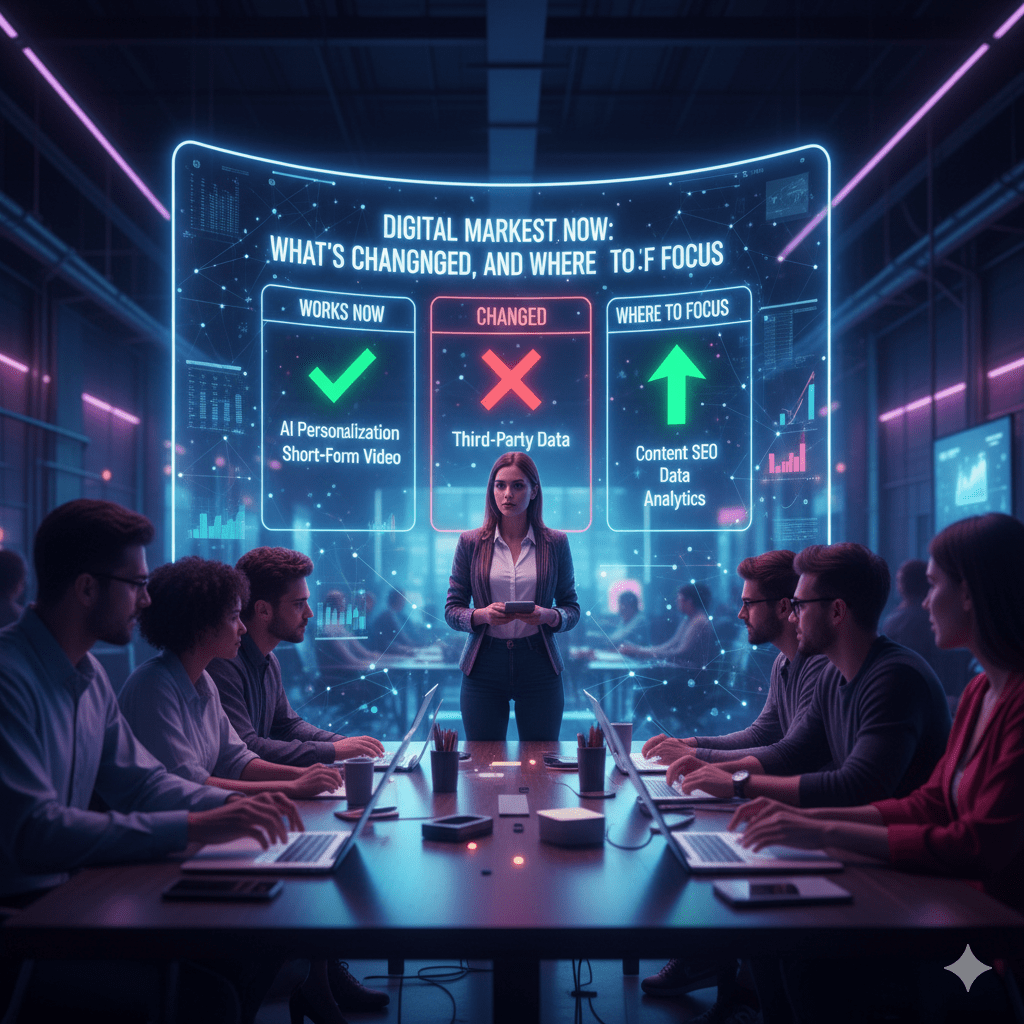
Digital Marketing: What Works Now, What’s Changed, and Where to Focus
Digital Marketing used to feel simple: publish content, run ads, post on social, collect leads, repeat. That still works in parts, but the game has changed in ways people notice every week. Tracking is harder. Attention is split across more platforms. Search results pages look different than they did a few years ago. AI tools can speed up production, yet they also flood the internet with lookalike posts.
If you want Digital Marketing that actually produces leads, sales, and repeat business, you need a sharper view of what still pulls weight, what needs updating, and what to ignore even if it’s trending.
This guide is written in the same spirit people use when they study publishing sites like digitalconnectmag.com: not as “inspiration,” but as a live look at what gets clicks, what keeps readers, and what turns interest into action.
What “works now” is not one tactic, it’s the full journey
Digital Marketing performs best when you stop judging channels in isolation. SEO, social, email, PPC in digital marketing, and content marketing and digital marketing all work more reliably when they connect to one clear journey:
A person discovers you, understands what you do, trusts you enough to take a step, then buys or books.
That sounds obvious, yet many brands still run separate “campaigns” that do not connect. They post on social with one message, run ads with another, and send visitors to pages that explain something else entirely.
When results feel random, it’s usually not because you picked the wrong platform. It’s because the journey has gaps.
The new baseline people expect online
There are a few expectations almost every buyer has now, whether you’re a local contractor, an ecommerce store, or a digital marketing agency for startups.
They expect fast clarity: what you offer and who it’s for.
They expect proof: examples, reviews, before-after, or real outcomes.
They expect low friction: simple forms, clear pricing ranges, clean booking.
They expect safety signals: transparent policies, real contact details, no shady popups.
If those basics are weak, no “latest digital marketing news January 2026” tactic will save the funnel.
What has changed in Digital Marketing recently
A lot of advice online is outdated because the foundations shifted.
First, tracking is less straightforward. Cookies and privacy changes reduce the visibility marketers once had. That pushes teams toward cleaner first-party data, better lead tracking, and a tighter link between ad platforms and real sales outcomes.
Second, content volume exploded. “Faceless digital marketing” content mills and AI drafts can produce endless posts, which makes it harder to stand out with generic content. The bar moved from “publish often” to “publish with a point.”
Third, the audience is pickier. People have seen every claim and every template. They scroll faster, they bounce faster, and they trust slower.
Fourth, platform behavior changes faster. One month short-form video is generous, the next it isn’t. One year local digital marketing is easy through a platform’s built-in reach, the next year you need paid support again.
So the smart move is not chasing every trend. It’s choosing a few focus areas and building depth.
Where to focus first: a practical priority order
If you want a calm approach, start here. This order works for most small businesses, startups, and service providers.
Step one: positioning that doesn’t sound like everyone else
Before “digital marketing packages,” before a bootcamp, before you hire from “top digital marketing agencies,” you need words that separate you from the crowd.
A strong positioning statement answers:
Who you help.
What result you help them get.
What you do differently.
This matters even more in crowded categories like real estate digital marketing, dentist digital marketing, digital marketing for doctors, and digital marketing for home services. Buyers in those niches have been pitched nonstop. They spot recycled language quickly.
Step two: the page that does the selling
Your homepage or landing page is often the real salesperson. Many brands drive traffic well and still struggle because the page doesn’t convert.
A high-performing page usually includes:
A clear offer above the fold.
A short explanation of the process.
Proof that looks real, not stock.
A direct next step: call, form, booking, or checkout.
If you do a digital marketing audit and it only focuses on “posting more,” it’s missing the real problem. Most of the time, the page needs tightening before the channel mix.
Step three: one reliable acquisition channel
Pick one primary channel and build consistency.
For some, that’s search content.
For others, it’s paid search.
For local trades like digital marketing for plumbers, electricians, contractors, and landscapers, local listings plus paid lead capture can perform well.
For ecommerce digital marketing, product-led ads and email can do heavy lifting.
Once one channel becomes reliable, expand.
SEO, paid ads, and social: how to think about the mix today
Digital Marketing isn’t “SEO vs ads vs social.” It’s what each channel does best.
Search is still a high-intent engine
Search brings people who already want something. That’s why it remains valuable even when search results pages change.
If you publish content, don’t write for algorithms. Write for the person typing the query. This is where the “evaluate the digital marketing” mindset helps: you measure content by outcomes, not by how smart it sounds.
A simple structure works well:
Start with the direct answer.
Then explain the why.
Then show options and trade-offs.
Then give a next step.
That style is why readers study sites like digitalconnectmag.com. It often meets people at the exact moment they’re searching for an explanation, not a sales pitch.
PPC helps when you need controlled demand
PPC in digital marketing works best when you already know your offer converts and you want predictable lead flow. If you run paid ads before your offer and page are clear, you end up paying to learn painful lessons.
Paid ads also demand creative testing. This is where creative digital marketing matters more than platform tricks. The ad that wins is usually the one that communicates the offer fastest, with proof that feels believable.
Social is proof and relationship, not only reach
Social can be a discovery channel, but it’s also a trust channel. People check it to confirm you’re active, real, and consistent.
This matters a lot for service businesses. If someone is about to book a contractor, a dentist, or a real estate agent, they often look for signs of legitimacy before contacting.
Social works best when you treat it like a steady window into your work: short tips, behind-the-scenes, results, client stories, and clear offers.
Content that wins now: depth, opinion, and usefulness
If your content feels like every other post, it won’t hold attention. Digital Marketing content that performs now usually has at least one of these traits:
It teaches something with real detail.
It takes a clear stance.
It includes examples that feel lived-in.
It solves one problem fully, not five problems halfway.
This is also why “white label digital marketing” content can be tricky. A lot of white label work ends up sounding generic because it’s produced at scale. If you offer white label digital marketing, your edge should be your process, your niche knowledge, and your ability to speak like a real operator.
UGC, video, and the new creative advantage
Short video and UGC-style content still pull attention because it feels human. That’s why people search for “best UGC video platforms for digital marketers” and “reviews of UGC video editors for small businesses.”
The big shift is that “polished” is not always better. Clear beats cinematic. Real beats perfect.
If you sell a service, short videos that show your thinking often outperform glossy montage clips. If you sell products, real demos beat static claims.
Industry-specific Digital Marketing that actually fits the buyer
Digital Marketing changes depending on what you sell. A single playbook doesn’t fit every niche.
For healthcare niches like digital marketing for doctors, dentists, and chiropractors, trust and compliance matter. People want safety, proof, and clear explanations. The best content often answers “what happens next” and “what this will cost.”
For trades like digital marketing for HVAC companies, plumbers, contractors, and home services, speed matters. People searching those services usually want fast booking, clear service areas, and proof you show up.
For manufacturers and industrial brands, the buying cycle is longer. Manufacturing digital marketing agency work often leans on case studies, technical pages, and lead nurturing.
For startups, digital marketing agency for startups usually means fast testing, clear positioning, and messaging that makes investors and early users understand the product quickly.
If you try to market all of these with the same copy, performance suffers.
Careers, salaries, and learning Digital Marketing without getting misled
People search “digital marketing salary” and “how much do digital marketers make” because the career looks attractive. It can be, but the path matters.
A digital marketing bootcamp or digital marketing boot camp can help if you need structure. Certificates like the Google digital marketing and e commerce certificate can help beginners build a base. A digital marketing internship can be a fast way to get real experience.
Still, the fastest growth tends to come from doing real work:
Build a small portfolio by running campaigns for your own project.
Learn one skill deeply first: SEO writing, paid ads, email, or creative.
Then add analytics and conversion skills so you can explain results.
If you’re hiring, don’t judge a candidate only by a digital marketing resume. Ask them to explain what they did, why they did it, and what changed after. That reveals more than buzzwords.
Choosing help: agencies, consultants, and packages
Not every business needs “top digital marketing agencies.” Some need one strong freelancer. Some need an internal hire. Some need a specialist for one channel.
If you’re looking at digital marketing packages, focus less on deliverables and more on outcomes. “We’ll post 30 times” isn’t a result. Ask what the work is meant to change: more leads, higher close rate, better local visibility, stronger email conversions.
For local searches like digital marketing Chicago, digital marketing Colorado Springs, digital marketing in Cincinnati, or even “digital marketing Zanzibar,” the best provider is often the one who understands local behavior, not the one with the biggest pitch deck.
You’ll also see brand-specific searches like “your digital promoter digital marketing agency in delhi reviews.” In those cases, people want trust signals. If you’re an agency, your own marketing should match what you promise clients: clear offers, proof, consistent publishing, and honest language.
If your work includes Garage2Global queries such as affordable digital marketing with garage2global or digital marketing solutions from garage2global, the lesson is simple: buyers are price-aware and outcome-aware. They want clarity on what they get, how long it takes, and what success looks like.
The measurement mindset that keeps you from guessing
Digital Marketing improves when you stop measuring vanity and start measuring progress.
Instead of obsessing over views, focus on actions:
Do more people contact you?
Do more people book?
Do more people add to cart and complete checkout?
Do more leads turn into paid work?
Use basic tracking that connects marketing to outcomes. You don’t need a complex setup to start. You need consistency in how you record leads, where they came from, and what happened afterward.
This is also where an honest digital marketing audit helps. Not the kind that spits out generic scores, but the kind that shows where people drop off and why.
A note on global Digital Marketing language
People search in many languages: stratégie marketing digital, estrategias de marketing digital, consultoria de marketing digital, jasa digital marketing, and even “qué es el marketing digital.” That’s a reminder that Digital Marketing isn’t only a US and UK conversation.
If your market is multilingual, your best move is not automated translation. It’s writing that feels natural in the language the buyer actually uses. That alone can separate you in competitive spaces.
Conclusion
Digital Marketing still works, but it works differently than it did a few years ago. The winners now build clear positioning, pages that convert, and one reliable channel before they expand. They treat social as proof, search as intent, and paid ads as a tool for controlled growth once the offer is ready. They also put more effort into creative, real examples, and content that feels specific instead of generic.
If you focus on the full journey and measure outcomes instead of noise, you’ll spend less time chasing trends and more time building marketing that keeps producing results.


